Front Door Steps: Ideas, Designs & Materials
Front door steps ideas for kerb appeal — natural stone, porcelain, brick and tiled entrances, plus edging, handrails, lighting, non-slip and planting.
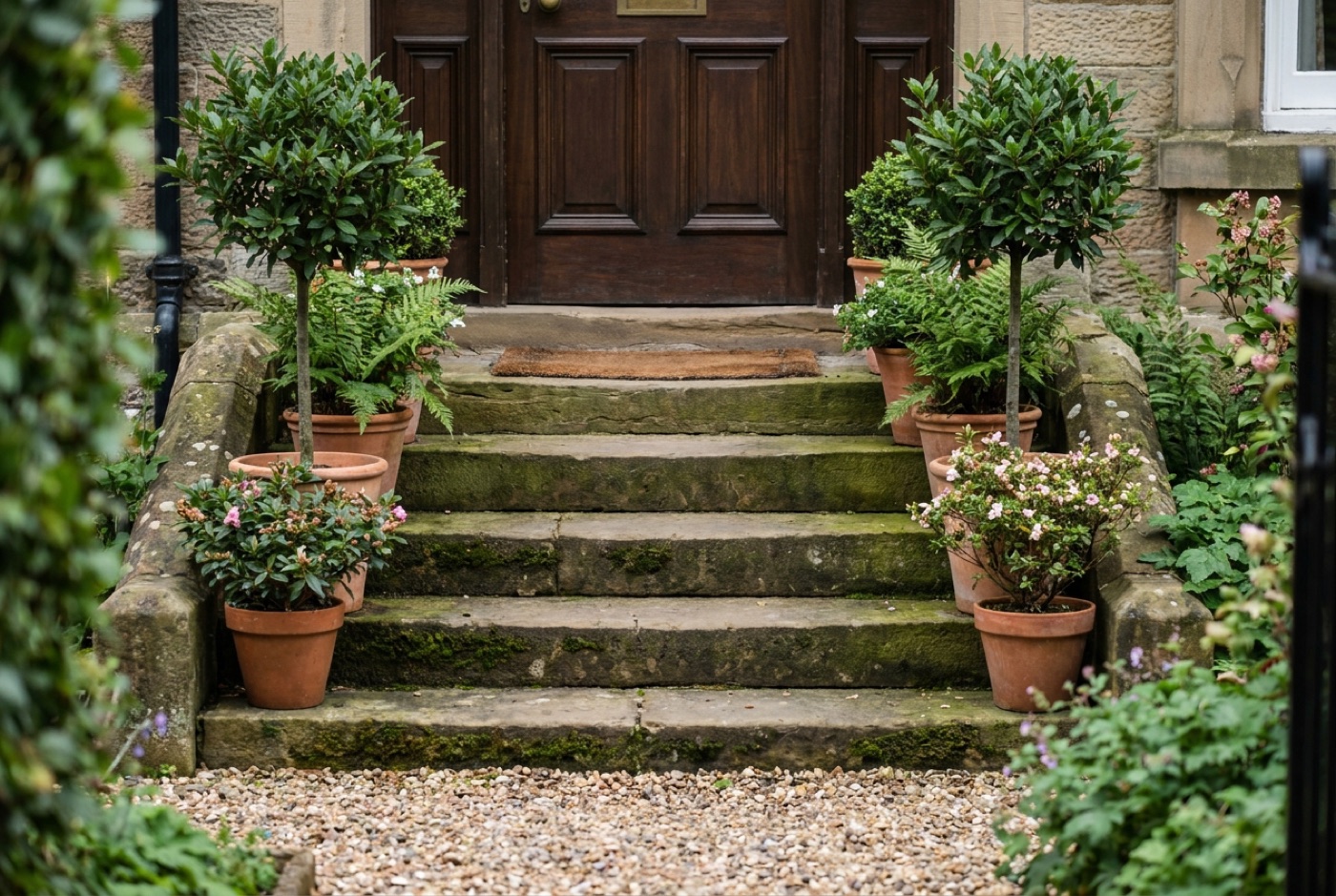
Your front steps are the first thing a visitor touches and the last thing they see when they leave — so they do a disproportionate amount of the work when it comes to kerb appeal. Get your front door steps ideas right and the whole façade lifts: the entrance reads as cared-for, the materials tie into the house, and the walk to the door feels deliberate rather than accidental. Get them wrong and you have a slippery, chipped, mismatched approach that quietly drags the value of the property down. This guide walks through the best materials for entrance steps, single-step versus a flight, edging and bullnose detailing, handrails, lighting, non-slip safety and the planting that frames it all — with a practical tip for each so you can copy the look with confidence.
Front door steps ideas: start with the material
The material sets the tone of the entire entrance, so it is the first decision to make. On a period house you usually want to echo what is already there — York stone, limestone, brick or tile. On a contemporary build you have more freedom to introduce porcelain, granite or a crisp, calibrated stone. Here is how the main options stack up for a front door.
| Material | Look | Grip when wet | Upkeep | Best for |
|---|---|---|---|---|
| York / limestone | Warm, traditional, period | Good (riven) | Seal every few years | Cottages, Victorian/Edwardian homes |
| Porcelain | Sharp, modern, uniform | Very good (textured/R11) | Very low | New builds, contemporary façades |
| Granite | Solid, hard-wearing | Good (flamed) | Very low | High-traffic urban doorsteps |
| Brick | Homely, characterful | Fair | Repoint occasionally | Traditional and rural homes |
| Encaustic / geometric tile | Ornate, Victorian | Poor unless textured | Moderate | Period tiled porches |
For a deeper comparison of the natural options, our guide to the best stone for garden steps covers looks, durability and cost for each type — the same logic applies at the front door, just with a stronger emphasis on grip and consistency because these steps are used every single day.
Natural stone entrance steps
Natural stone is the default choice for a reason: it ages beautifully and reads as permanent. Pale limestone and buff York stone flatter red brick and rendered façades alike, while a mid-grey sandstone is a safe, handsome all-rounder. For a front door specifically, buy matching bullnosed step units rather than plain flags with sawn edges — the rounded front looks finished, sheds water and is far kinder to shins. Seal porous stone before it takes on algae; an unsealed sandstone doorstep in shade will green over within a couple of British winters.
Porcelain front steps
If your house is modern, or you simply want the lowest-maintenance option going, porcelain step treads are hard to beat. They barely absorb water, so algae struggles to gain a foothold, and a textured R11 finish keeps grip in the rain. Porcelain also comes in convincing stone, concrete and timber effects, so you can have the look of riven York with almost none of the upkeep. The trade-off is the fitting: porcelain needs a full mortar bed, a primer slurry and a proper wet-cutter, so it is less forgiving to lay than sandstone.
Brick and tiled steps
On a traditional home, brick steps are quietly perfect — pick a brick that matches or deliberately contrasts the house, lay the treads as headers or on edge for a crisp nose, and keep the pointing tidy. Original Victorian and Edwardian porches often have geometric encaustic tiles running up to the door; if you are lucky enough to have them, restore rather than replace. Tiles can be slick when wet, so reserve them for a covered porch, or add a discreet non-slip strip on the nose.
Single step vs a full flight
How many steps you have is largely dictated by the height difference between the path and the threshold, but the design response is different for each.
- A single step (150–200mm rise). The most common front-door situation. Make it generous and welcoming: a wide, deep tread with a clear bullnose reads as a proper landing rather than a lip to trip over. A single step is easy to get wrong by making it too shallow or too tall, so aim for a comfortable rise and a going deep enough to stand on with both feet.
- Two or three steps. Keep every rise and every going identical — the eye and the foot both notice inconsistency instantly, and uneven steps are the classic cause of stumbles at the door. A short flight is a chance to add a half-landing or a subtle curve.
- A full flight up to a raised entrance. Common on townhouses and homes on a slope. Here proportion is everything: a shallow, elegant rise with deep goings feels grand, while cramped steep steps feel mean. Build in a handrail and think hard about lighting.
Whatever the count, the golden rule is consistency. If your entrance sits at the bottom of a sloped plot, our sloped garden ideas piece has approaches for turning an awkward gradient into a graceful arrival.
Getting the proportions right
Comfortable steps follow a simple relationship between the height you step up (the rise) and the depth you step onto (the going). For an external front-door flight, a rise of roughly 150mm with a going of around 280–300mm feels easy and safe underfoot. Shallower rises feel more gracious; steeper ones feel utilitarian and are harder on knees. Keep the nose overhang modest — a large overhang looks elegant but concentrates wear and can chip.
Edging, bullnose and the details that read as “finished”
The difference between a doorstep that looks builder-basic and one that looks designed is almost always in the edge detail.
- Bullnose (rounded) nose. The classic, softest, most forgiving edge. Sheds water, hides minor chips and is comfortable underfoot. The default for most front steps.
- Pencil-round or half-bullnose. A tighter radius for a crisper, more contemporary line while still knocking the sharp corner off.
- Sawn / square edge. Very modern and architectural, but unforgiving — the arris chips easily and shows every knock, so reserve it for hard materials like granite or porcelain.
- Contrasting riser. Face the vertical riser in a darker brick, tile or stone to draw a shadow line and make each tread pop.
A small but high-impact trick is to run a contrasting border around the top landing — a soldier course of brick or a band of setts frames the door and makes a modest step feel intentional. Whatever edge you choose, pick a consistent detail and repeat it up the whole flight.
Handrails: safety without spoiling the look
A handrail transforms a flight from a hazard into an easy walk, and on anything more than a couple of steps it is worth having — especially for older residents and in icy weather. The trick is choosing one that suits the house rather than fighting it.
- Wrought-iron or powder-coated steel in black suits period and traditional homes and all but disappears against most façades.
- Stainless steel reads clean and modern next to porcelain or render.
- Timber on painted posts feels warm and cottagey.
- A dwarf wall with a stone or brick coping doubles as a handhold and a place to set a bag or a parcel down — quietly practical.
Fix handrails into the masonry or a solid post, never just into a thin tread, and set the height at roughly 900mm above the pitch line so it falls naturally to hand.
Lighting the entrance
Good lighting makes a front entrance safer and more inviting, and it is the single best upgrade for the way a house looks after dark.
- Recessed step lights. Low-level lights set into the risers or the flanking walls wash each tread with light so nobody misjudges a step. The most elegant and the safest option.
- A single wall lantern beside the door is the traditional choice and throws a warm pool over the threshold.
- Bollard or post lights flanking a wider flight signal the route and add symmetry.
- Discreet uplights in the planting either side add depth without glare.
Choose warm white (around 2700K) for a welcoming glow, keep the fittings weather rated, and put them on a dusk-to-dawn sensor or timer so the approach is never dark.
Non-slip and safety: the part people skip
Front steps are used every day, in all weathers, often while carrying shopping — so grip is not optional. Wet stone glazes over with algae, and a smooth doorstep in winter is a genuine hazard. Build grip in from the start.
- Choose a riven, flamed or textured finish rather than a polished or honed surface for any outdoor step.
- On existing smooth steps, retrofit an anti-slip nosing or tread insert — our guide to the best non-slip stone step treads covers the options that work for front-door use and how to fit them.
- Keep steps clear of moss and algae — regular gentle cleaning does far more for safety than any product.
- Make sure water drains away from the door and off the treads, so puddles never sit and freeze on the nose.
For the covered, sheltered situation of a porch specifically, our front porch steps ideas guide goes deeper on materials and safety where a roof changes the equation.
Planting and pots to frame the door
Planting is the fastest, cheapest way to make an entrance feel loved. Symmetry reads as smart, so a matched pair either side of the door is the reliable starting point.
- A matched pair of clipped bay, box balls or olive trees in good pots flanks the door and gives instant, year-round formality.
- Seasonal pots — tulips and primulas in spring, pelargoniums in summer, cyclamen and evergreen structure in winter — keep the entrance alive all year.
- Fragrant climbers like star jasmine or a scented rose trained around the door greet visitors before they knock.
- A trough of herbs or lavender on a wide step edge softens the stone and smells wonderful when brushed past.
Raise pots on pot feet so water drains and the stone beneath does not stain or green, and keep foliage clear of the actual treads so it never becomes a trip hazard or a hiding place for slippery leaves.
Putting it together: a few complete looks
A handful of combinations that reliably look expensive:
- Classic Victorian. Buff limestone or York steps with a bullnose, a tiled path leading in, a black wrought-iron handrail, a single wall lantern and a pair of clipped bay trees.
- Contemporary new build. Textured grey porcelain treads with a sawn edge, recessed riser lights, a slim stainless handrail and architectural grasses in matt planters.
- Country cottage. Reclaimed brick steps with a soft nose, a timber handrail, a warm lantern and overflowing pots of lavender and pelargoniums.
- Urban townhouse. A flight of flamed granite steps, a dwarf wall with a stone coping, bollard lights and topiary in stone urns.
FAQ
What is the best material for front door steps in the UK?
For most homes, natural stone (limestone, York or sandstone) or textured porcelain are the best choices — they look smart, wear well and, with a riven or R11 finish, stay grippy in the wet British climate. Porcelain wins on low maintenance, while natural stone wins on character and period authenticity. Match the material to the age and style of your house first, then prioritise a non-slip surface.
How much does it cost to replace front door steps?
Cost varies widely with the material and the size of the job, but the biggest variables are how many steps you have, whether the base needs rebuilding, and the stone you choose. Porcelain and premium stone cost more per square metre than Indian sandstone, and any groundwork or structural rebuilding adds significantly. Get two or three quotes and make sure they include a proper concrete base — steps laid on a poor foundation are the ones that sink and crack.
Do front door steps need a handrail?
There is no fixed rule for a couple of shallow steps, but a handrail is strongly recommended on any flight and is a genuine safety benefit for older or less mobile users. On a flight of three or more steps most people should fit one. Choose a style that suits the house, fix it securely into masonry or a solid post, and set it at roughly 900mm high so it falls naturally to hand.
How do I stop my front steps being slippery?
Choose a riven, flamed or textured finish rather than a polished one, keep the steps free of moss and algae with regular gentle cleaning, and make sure water drains away from the treads. On existing smooth steps, fit an anti-slip nosing or tread insert — see our non-slip step treads guide for options suited to a front door.
How wide should a front doorstep be?
As a general rule, make the top landing at least as wide as the door and deep enough (ideally 600mm or more) to stand comfortably while you find your keys or a visitor waits. A generous, welcoming step reads far better than a shallow lip, and a wider landing gives you room for pots and a place to set down shopping.
Can I lay new front steps over old concrete ones?
Sometimes — if the existing steps are sound, level and structurally solid, you can clad them with stone or porcelain. But if the old steps are cracked, sinking or crumbling, they need breaking out and rebuilding on a proper base first. Cladding over a failing structure just hides the problem and the finish will crack again as the base moves. Always start from a solid, well-drained foundation.