35 Garden Path Ideas: Materials, Styles & Layouts
35 garden path ideas across natural stone, gravel, brick, sett and porcelain — plus styles, budget paths, edging and planting, with a tip for each.
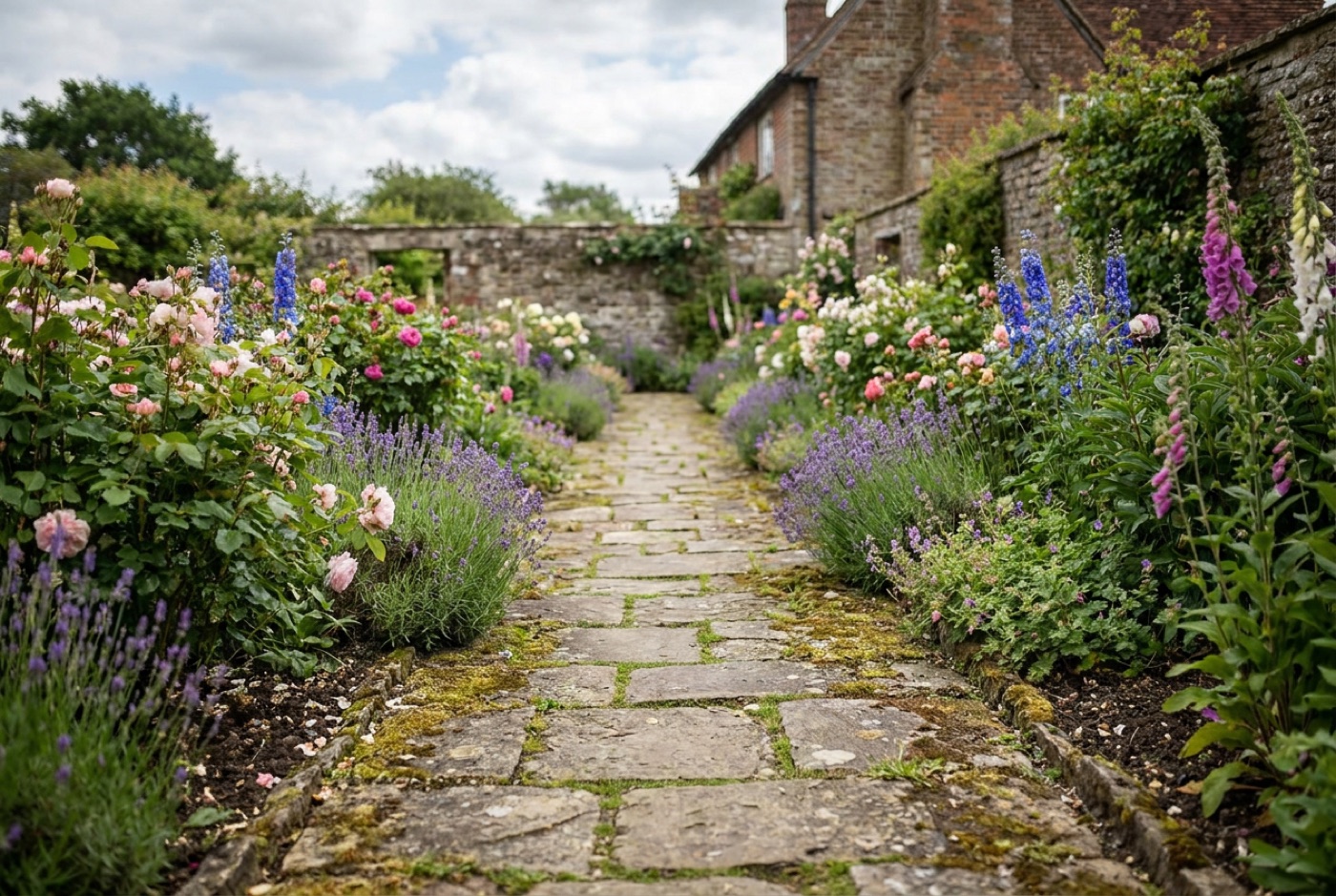
A path is the backbone of a garden. It decides how you move through the space, where the eye lands, and whether the whole plot feels considered or accidental. The best garden path ideas do two jobs at once — they get you cleanly from the back door to the shed or the seat under the tree, and they look like they’ve always belonged there. This is where material, style and layout all meet: a straight run of clipped York flags reads formal, the same route in meandering stepping stones reads relaxed, and a gravel ribbon between billowing borders reads pure cottage garden. Below are 35 distinct ideas, grouped by material, style, budget, edging and planting, each with the look it suits and one practical tip to get it right. Steal freely.
Natural stone path ideas
Natural stone is the classic British garden surface: it grips underfoot, weathers beautifully and suits period and modern gardens alike. If you’re weighing up which stone to buy, our guide to the best stone for garden steps applies just as neatly to paths.
1. Riven York stone flag path
Warm buff-to-grey York sandstone with a naturally riven (split) face is the quintessential English path. It grips well when wet, ages into something genuinely lovely, and looks right against old brick and mature planting. Buy the thickest flags you can and seal them — York is porous and will hold algae otherwise.
2. Indian sandstone path on a budget
Riven Indian sandstone gives you a very similar look to York for a fraction of the price, which is why it dominates UK garden centres. The multi-colour blends (rippled buffs, greys and rusts) suit almost any scheme. Choose a calibrated pack so every flag is the same thickness — it makes laying to a level far quicker.
3. Slate path for a dark, modern look
Split-face slate brings a moody, near-black depth that sets off green planting and pale gravel beautifully. The riven texture grips well and the colour reads effortlessly contemporary. Slate can be brittle at the edges, so bed each piece fully — voids underneath are what cause cracks.
4. Random-rectangular flag path
Mixing several flag sizes in a “random rectangular” or “patio pack” layout gives a relaxed, unforced pattern that hides slight cuts and follows a garden’s informality. It’s forgiving for a first-timer because you’re not chasing perfect coursing. Dry-lay the whole run first so you avoid four corners meeting at one point.
5. Crazy paving path
Broken, irregular stone pieces jigsawed together — crazy paving — is having a proper revival for cottage and courtyard gardens. It uses up offcuts, follows curves easily and looks charmingly old-fashioned. Keep the joints tight and consistent, or the finished path looks busy rather than characterful.
6. Flamed granite path for heavy traffic
Where a path takes a pounding — the main route to a garden office, a shared side return — flamed granite is the workhorse that outlasts everything around it. The flamed finish is deliberately roughened for grip and granite shrugs off frost. It’s the priciest natural option and unmistakably modern, so it suits contemporary schemes best.
Gravel and loose-surface path ideas
Gravel is the cheapest, fastest, most forgiving way to make a path. It drains freely, follows any curve and has a lovely crunch that doubles as a low-key security feature.
7. Self-binding gravel path
Self-binding gravel (like Breedon-type golden gravel) compacts into a firm, knit-together surface that’s far more stable than loose shingle — you can push a wheelbarrow over it and it won’t scatter. It’s the classic look for a country or kitchen garden. Lay it over a compacted sub-base and edge it, or it slowly migrates into the borders.
8. Pea shingle path
Loose pea shingle is the budget champion: pour it over a weed membrane and a firm base and you have a path in an afternoon. The rounded stones feel soft underfoot and suit an informal cottage plot. Keep the layer shallow (around 40mm) over a firm sub-base — deep loose gravel is tiring to walk on and impossible for a wheelbarrow.
9. Gravel path with stepping stones set in
Set flat stone slabs or sawn setts flush into a gravel run and you get a firm, level walking line with a gravel surround that drains and crunches. It’s the best of both worlds and keeps mud off your shoes. Space the slabs to a natural, comfortable stride — our guide to garden stepping stones covers the spacing and laying in detail.
10. Bark or wood-chip woodland path
For a shady, informal corner, bark or wood chip makes a soft, quiet, inexpensive path that suits a woodland or wildlife garden and is kind to bare feet and paws. It does break down, so top it up every year or two and lay it over a membrane to slow the weeds coming through.
11. Resin-bound gravel path
Resin-bound gravel gives you the natural look of loose stone but bound into a smooth, firm, permeable surface with no loose scatter — smart, low-maintenance and wheelchair- and buggy-friendly. It’s a specialist install rather than a DIY pour, and it needs a solid, dry base, so brief a contractor who does it regularly.
Brick, sett and paver path ideas
Small units — bricks, setts, cobbles, clay pavers — follow curves effortlessly and tie a garden back to the house better than almost anything.
12. Brick path to match a period house
A brick path in a herringbone or basket-weave bond ties a garden to a Victorian or Edwardian home better than any other surface, especially matched to the house brick. Use frost-resistant paving or engineering bricks, not soft facing bricks — facings soak up water and spall in the first hard winter.
13. Herringbone clay-paver path
Clay pavers laid in a 45-degree herringbone create a tight, interlocking surface that’s both handsome and strong enough for a wheelbarrow or bin route. The warm autumnal tones age beautifully and never fade like concrete. Lay them on a compacted base with a firm edge restraint, or the bond gradually creeps apart.
14. Granite sett path for texture
Granite setts (small cubes) laid in courses or fans bring gorgeous, period-yard texture and follow curves with ease. The joints add grip and the stone lasts generations. Setts are uneven underfoot, so reserve them for slower, decorative routes rather than the main path where someone’s carrying shopping.
15. Cobbled path for a courtyard
Rounded cobbles set on edge give a rustic, characterful courtyard floor with real old-world charm. They’re best in small, contained areas and dry-weather routes. Cobbles are knobbly to walk on, so run a smoother “walking line” of flags or setts down the middle if it’s a route you use daily.
16. Mixed brick-and-stone path
Combining a stone or concrete field with a contrasting brick edge or infill reads as considered and bespoke, and the two-tone effect defines the path’s line. Keep to two materials maximum — three starts to look accidental rather than designed.
Porcelain and contemporary path ideas
17. Porcelain plank path
Outdoor porcelain in long plank formats — often in a wood or stone effect — gives a crisp, contemporary run that barely absorbs water, resists frost and almost never stains. It’s ideal carried out from a modern porcelain patio for a seamless flow. Specify a textured R11 anti-slip grade for a path, and expect a full mortar-bed install rather than a DIY dry-lay.
18. Large-format paver path
Big, single-size porcelain or sawn-stone pavers laid with slim joints give a sleek, minimalist path that suits a modern extension or courtyard. The clean lines make a small garden feel calmer and more spacious. Large units show every dip, so the sub-base has to be dead flat — this is one to get right underneath.
19. Floating stepping-pad path
For a high-end modern look, set large square pads with wide, planted or gravel gaps so each pad appears to float. It’s striking across a lawn or a bed of grasses. Bed each pad on a full mortar base, not five spot-dabs — spot-bedding is what causes rocking pads and cracks down the line.
Garden path styles
Material aside, the style of a path — its line and formality — sets the whole mood of a garden.
20. Straight formal path
A dead-straight path drawn along an axis feels formal, calm and architectural, and it makes a plot feel longer by drawing the eye to a focal point at the far end. Give it a clear destination — a bench, an urn, a gate — so the eye has somewhere to land.
21. Curved, meandering path
A gentle curve is romantic and relaxed: it slows the walk, hides the far end and makes a garden feel bigger by revealing it a bit at a time. Set the curve out with a hosepipe on the ground first and live with it for a day — most beginners make curves far too tight and fussy.
22. Cottage-garden path
A cottage path is narrow, informal and half-swallowed by planting that spills over the edges — think self-binding gravel or worn brick between billowing borders. Let the plants flop over the edges rather than fighting them; that softness is the look.
23. Modern minimalist path
Clean, wide, single-material runs with slim joints and restrained planting read sharp and contemporary. Large-format porcelain or sawn stone does this best. Keep the palette tight — one paving material, one or two plants repeated — and let the simplicity do the work.
24. Diagonal path across a small garden
Running a path diagonally across a square or shallow plot creates the longest possible sight line and instantly makes the garden feel bigger. It also gives you interesting triangular beds to plant. Anchor each end properly so the diagonal reads as deliberate, not like a shortcut worn across the lawn.
25. Path that disappears around a corner
A path that curves out of sight behind a shrub or a screen creates mystery and pulls you onward to see what’s beyond. It’s one of the oldest tricks for making a small garden feel like it has more to discover. Plant or place something just out of view so there’s a genuine reward around the bend.
Budget garden path ideas
26. Compacted gravel over membrane
The cheapest durable path going: a weed membrane, a firm sub-base and a shallow layer of gravel, edged to hold it in. Materials are inexpensive and it’s a genuine weekend DIY job. Spend the money on the edging — without a firm restraint, a cheap gravel path spreads into the beds within a season.
27. Reclaimed and salvaged materials
Reclaimed bricks, broken flags for crazy paving, or salvaged setts from a yard cost a fraction of new and come with instant character and patina. It’s the greenest option too. Check reclaimed bricks are frost-resistant before you commit — soft Victorian facings can crumble outdoors.
28. Stepping stones across a lawn
Individual slabs set flush into turf make an informal, almost-free path you can mow straight over — perfect for a low-traffic desire line across the grass. Set each slab slightly below the turf so the mower blades clear it. Our how to lay stepping stones guide walks through the method.
29. Log-round or timber-disc path
Thick hardwood log rounds sunk into the soil make a charming, low-cost woodland path if you can source seasoned rounds. They suit informal, shady corners. Accept they’ll get slippery when wet, so reserve them for dry-weather, low-traffic routes and top with chicken wire if grip is a worry.
Path edging ideas
Edging is what separates a path that looks built from one that looks like it was poured and forgotten — it holds loose surfaces in and gives a crisp line.
30. Brick or sett edging course
A single soldier course of bricks or setts along each side gives a firm, traditional restraint that holds gravel or flags in place and reads beautifully against planting. Haunch the edging in concrete on the hidden side so it stays put under pressure from a wheelbarrow or the borders behind.
31. Steel or aluminium edging strip
Slim metal edging gives a barely-there, ultra-crisp line that suits modern gardens and lets planting run right up to the path. It bends around curves neatly and lasts for years. Buy a rust-resistant grade (Corten if you want the rusted look, galvanised or aluminium if you don’t) and drive the pins in fully.
32. Log-roll or timber-board edging
Timber log-roll or a treated board edge is the budget-friendly way to retain gravel or bark on an informal path, and it suits cottage and woodland styles. Use a tanalised (pressure-treated) grade and peg it firmly, because untreated timber against damp soil rots within a few seasons.
Planting between and beside paths
Planting is the final 10% that turns a hard surface into part of the garden. For more on softening hard landscaping — including on a slope — see our sloped garden ideas.
33. Creeping herbs in the joints
Plant low creeping thyme, chamomile or mind-your-own-business into wide joints and brushing past releases the scent while the green joints look wonderfully established. Keep the planted joints to the centre of a flag where feet rarely land, so the plants survive and the walking edge stays safe.
34. Tumbling plants along the edges
Let low, spreading plants — erigeron, hardy geraniums, alchemilla, catmint — flop over the path edges to blur the hard line and soften the whole run. Choose tough, drought-tolerant plants for the dry, free-draining strip right at a path’s edge, where the soil bakes.
35. A clipped, structured path border
For a more formal look, flank the path with a low clipped hedge (box, or blight-proof alternatives like Ilex crenata) or a repeated rhythm of the same plant. Repetition is what makes it feel designed. Keep the hedge low enough that it frames the path rather than crowding it — waist-height at most on a narrow run.
Comparing the most popular path materials
Cost bands are rough and indicative — finish, quality, quantity and your region all move the number.
| Material | Look | Grip when wet | Maintenance | Relative cost |
|---|---|---|---|---|
| Natural stone flags (York, Indian) | Warm, traditional, riven | Very good (riven) | Seal it; occasional clean | Budget–premium |
| Slate | Dark, contemporary | Good (riven) | Low | Mid |
| Gravel (self-binding) | Informal, country | Good | Top up; edge it | Low |
| Bark / wood chip | Soft, woodland | Fair | Top up yearly | Very low |
| Brick / clay paver | Warm, period, patterned | Good | Occasional re-point | Mid |
| Granite sett | Textured, characterful | Very good | Very low | Mid–premium |
| Porcelain | Any look, ultra-consistent | Good (R11) | Very low, no sealing | Mid–premium |
| Resin-bound gravel | Neat, natural, smooth | Good | Very low | Premium |
A quick word on getting a path right
Three rules apply whatever look you choose. First, the sub-base does the work — most failed paths fail underneath, from a soft or shallow base, not on top, so compact a proper sub-base before you lay anything you want to last. Second, fall and drainage matter — give the surface a slight cross-fall (around 1:60 to 1:80) so water runs off rather than pooling and freezing. Third, edging is not optional on loose surfaces — without a firm restraint, gravel, bark and even flags creep into the borders within a season.
If your path has to climb a level change, it becomes a flight of steps, and our garden steps ideas piece is full of layouts worth stealing. And once you’ve settled on a look, choosing the right stone comes down to grip, durability and how it sits against your house — all covered in the best stone for garden steps guide, which applies to paths just as well.
FAQ
What is the cheapest way to make a garden path?
Loose pea shingle or compacted gravel over a weed membrane is the cheapest durable path — the materials are inexpensive and it’s a genuine DIY job. Bark or wood chip is cheaper still for an informal woodland route, and stepping stones set into an existing lawn cost almost nothing. Whatever you choose, spend a little on firm edging, or a cheap loose surface spreads into the borders within a season.
What is the best material for a garden path?
There’s no single winner — it depends on the style and how much traffic the path takes. Riven natural stone or brick suits period and cottage gardens and grips well when wet; porcelain and large-format pavers suit modern schemes and need almost no upkeep; self-binding gravel is the best-value all-rounder for a country garden. For a main route used daily and pushed a wheelbarrow along, a firm bound surface (paving, brick or resin-bound gravel) beats loose gravel.
How wide should a garden path be?
For a main path where two people walk side by side, aim for around 1.2 metres (4 feet). A secondary or single-person path can drop to about 0.9 metres (3 feet), and an informal stepping-stone route can be narrower still. Err generous on your main route — a path that feels a touch too wide reads gracious, while one that’s too narrow feels mean and forces you to walk in single file.
How do I stop weeds growing in my garden path?
Lay a quality weed-suppressing membrane under any loose surface (gravel, bark or stepping stones) before you fill, and point the joints of a flag or brick path with mortar or a jointing compound rather than leaving them open. For weeds that still appear, pull or hoe them while small, or use a hot-water or hand weeder rather than harsh chemicals near planting. A firm, well-compacted base also gives weeds far less room to take hold.
Do I need a sub-base under a garden path?
For anything more than a light stepping-stone route, yes — a compacted sub-base (typically MOT Type 1 hardcore) is what stops a path sinking, rutting or heaving over time. Most failed paths fail underneath, not on top. A stepping-stone path across firm lawn can sometimes skip it, but any path taking regular foot traffic or a wheelbarrow needs a proper base to last.
Which garden path is best for a wheelchair or buggy?
A firm, smooth, bound surface is essential — resin-bound gravel, porcelain or large-format pavers, or well-compacted self-binding gravel all work, whereas loose shingle, bark and cobbles do not. Keep the path at least 0.9 metres wide (1.2 metres is better), lay it to a gentle, even fall for drainage without a steep camber, and avoid raised lips or wide open joints that a wheel can catch on.