York Stone Steps & Paving: The Complete Guide
The complete guide to York stone for steps and paving — new vs reclaimed, riven finish, grip, durability, sealing, uses, cost, and how to lay and maintain it.
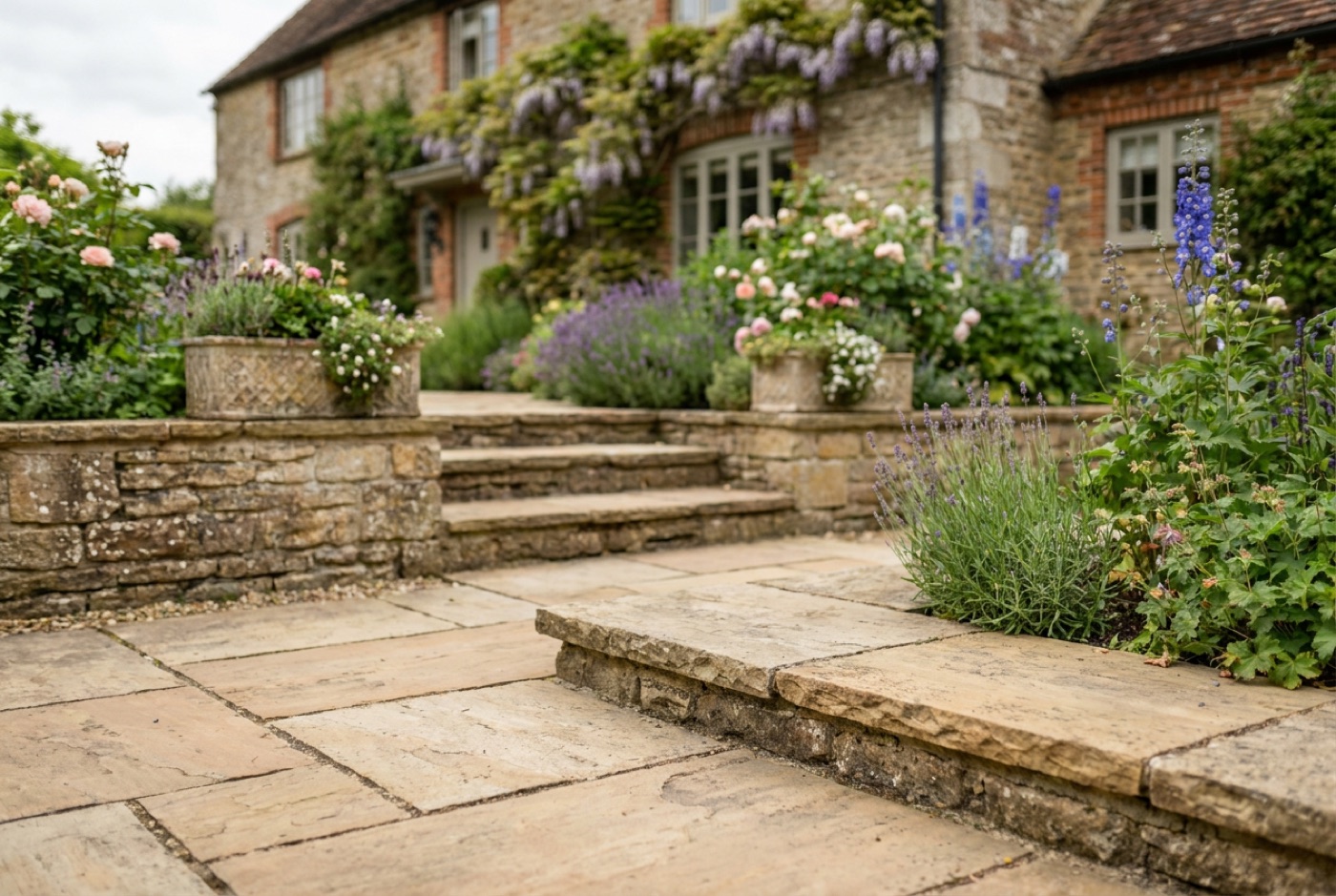
York stone is the quiet aristocrat of British paving — the warm buff-and-grey flagstone underfoot in cathedral closes, cottage gardens and the better London squares. It’s a hard-wearing sandstone quarried in and around Yorkshire, prized for a naturally textured “riven” surface that grips underfoot and a colour that only gets better as it weathers. For steps and paving it’s about as authentically British as stone gets, which is exactly why it commands a premium and why so much of it is salvaged, cleaned and laid again decades or even centuries after it was first cut. This guide covers what York stone actually is, the crucial difference between new and reclaimed, the finishes and colours, why it grips, how durable it is, where it’s used, roughly what it costs, and how to lay and look after it.
What is York stone?
York stone is a sedimentary sandstone — grains of quartz sand bound together with natural minerals and compressed over millions of years into dense, layered rock. Geologically it comes from the Carboniferous coal-measure sandstones of the Pennines, and true York stone is quarried in a relatively small area of West and South Yorkshire.
The layered way it forms is the key to everything that makes it good for steps and paving. Because the sand was laid down in beds, the stone splits cleanly along its natural planes (its “bedding”), producing flat flags with a subtly textured face. That natural split face is the celebrated riven finish — and it’s what gives York stone both its looks and its grip.
A note on the name: “York stone” (or “Yorkstone”) is used loosely in the trade. Strictly it means genuine Yorkshire sandstone, but you’ll see the term stretched to cover similar-looking sandstones from elsewhere. Reputable suppliers will tell you the quarry and bed; if a price looks too good to be true, it may be an imported sandstone sold on York stone’s reputation rather than the real thing.
New vs reclaimed York stone
This is the single most important decision when buying York stone, and the two are almost different products.
Reclaimed York stone is salvaged from old mill floors, pavements, yards and demolished buildings. It’s been walked on and weathered for anything from decades to a couple of centuries, which gives it a depth of colour, patina and worn character that no new stone can fake. It’s the default choice for period gardens, listed buildings and anywhere you want instant age. The catches: supply is finite and variable, thicknesses are irregular (old flags can run from about 40mm to 100mm+, which complicates laying), and the best clean, thick stock is genuinely expensive and can sell out.
New (freshly quarried) York stone is cut to modern standards — consistent calibrated thicknesses (commonly around 30–50mm), sawn edges and predictable sizes. It’s much easier and quicker to lay, generally a little cheaper than prime reclaimed, and it will weather down towards the reclaimed look over the years. What you sacrifice is the immediate patina; new York stone looks new for a while before the British weather starts its work.
| Reclaimed York stone | New York stone | |
|---|---|---|
| Look | Aged patina from day one | Fresh, mellows over years |
| Thickness | Irregular (~40–100mm+) | Calibrated (~30–50mm) |
| Laying | Slower, more skill needed | Faster, more predictable |
| Supply | Finite, variable | Consistent, orderable |
| Cost | Premium (prime stock highest) | Premium, usually a little less |
| Best for | Period & heritage projects | New builds, matched runs |
If you’re weighing York against other stones entirely, our pillar on the best stone for garden steps sets it in context, and our head-to-head on York vs Portland vs granite for steps compares it directly with the other two British classics.
Colours and finishes
Colours
York stone isn’t one colour — it’s a family of warm, muted tones that shift depending on the bed and the quarry:
- Buff and honey — the softest, warmest, most cottage-garden colours.
- Grey and blue-grey — cooler, more restrained, common in townscape paving.
- Brown and rust — iron in the stone gives streaks and mottling.
- Silver-grey — a paler, weathered look often seen on old pavements.
Most reclaimed stone is a multi-tonal blend of these, which is a big part of its charm — no two flags are identical, and the mix reads as natural rather than manufactured. Over time the whole surface mellows and the colours deepen slightly, especially once the stone has been walked on and weathered.
Finishes
- Riven — the natural split face. Textured, subtly undulating, the traditional and grippiest finish. The default for garden steps and paving.
- Sawn — cut with a saw for a flatter, more uniform surface. Cleaner and more contemporary, but smoother, so it needs a good clean and seal to keep its grip.
- Sawn-and-honed — sawn then smoothed. Looks refined but is the least grippy; keep it away from step treads.
- Tumbled / textured edges — flags run through a tumbler for softened, aged edges, mimicking wear on new stone.
For steps specifically, riven is almost always the right answer: the texture is what keeps a wet tread safe underfoot.
Why York stone grips
Grip is the reason York stone earns its place on steps rather than just patios. A step tread takes your full weight in the wet, often at the top or bottom of a garden when your mind is elsewhere, and a slick tread is genuinely dangerous.
York stone grips well for two reasons. First, the riven surface is naturally textured — the split face has fine ridges and undulations that break up a film of water and give the sole of a shoe something to key against. Second, even sealed, York stone doesn’t take a high-gloss film the way some treatments leave on smoother paving, so it stays matt and grippy. Compare that with a sawn-and-honed limestone or a glossy wet-look-sealed slab, both of which turn treacherous the moment it rains.
The two things that undo York stone’s natural grip are algae and the wrong sealer. A green film of algae will make any stone slippery, however good its texture — which is why keeping steps clean matters as much as choosing the right stone. And a film-forming, glossy sealer can flatten the very texture that provides grip. On treads, stick to a matt, breathable, impregnating sealer. If grip is your overriding concern, our roundup of the best non-slip stone step treads is worth a read alongside this.
Durability and sealing
York stone is a hard, dense sandstone and, laid properly, it lasts for generations — the reclaimed stock people pay a premium for is the proof, having already survived a century of use. It stands up well to frost, foot traffic and the British climate, and it ages gracefully rather than degrading.
The caveat is porosity. Like all sandstone, York stone absorbs water — less than soft Indian sandstone, but far more than granite or porcelain. That absorbed water is what feeds algae, drives frost damage in a hard winter (water expands as it freezes inside the stone), and carries salts to the surface as efflorescence, the chalky white bloom you sometimes see on new paving.
Sealing is therefore strongly recommended for York stone steps, even though the stone is tough. A good breathable, impregnating sealer soaks in and protects from within: it slows water absorption, so you get less algae, fewer stains, easier cleaning and lower frost risk — all without changing the natural matt look or the grip. Crucially, use a matt / natural-finish sealer on treads, not a glossy wet-look, which can make a wet tread slippery. For the full picture on products and finishes, see our guide to the best stone sealers for steps.
Re-sealing is a periodic job, not a one-off: on steps, most impregnating sealers last a few years before they need refreshing. The simple test is to splash water on a tread — if it beads and rolls off, the seal is holding; if it soaks in and darkens the stone, it’s time to re-seal.
Where York stone is used
York stone is versatile enough to run right through a garden or entrance scheme, which is part of why it’s so prized — everything matches.
- Steps — riven York stone treads are a heritage classic, gripping well and weathering beautifully.
- Paving and patios — the traditional English flagstone; random-sized flags laid in a mixed pattern read as timeless.
- Copings — smooth-dressed York stone caps walls and step cheeks, giving a neat, hard-wearing edge that sheds water.
- Path edging and setts — smaller cut pieces edge paths and borders.
- Thresholds and doorsteps — a single thick worn flag as a doorstep is a lovely period detail.
- Wall cladding and quoins — dressed York stone facing on garden and retaining walls.
Because it comes in generous thicknesses, York stone is well suited to the load and wear of step treads. If you’re planning a full flight, our step-by-step guide to laying stone garden steps walks through the build from foundation to finished tread.
Roughly what does York stone cost?
York stone is a premium material, and prices swing widely with type, quality and thickness, so treat any figure as a broad guide rather than a quote. As a rough ordering of value:
- New calibrated York paving is the more affordable end of “premium” — dearer than Indian sandstone, more consistent and easier to budget for.
- Reclaimed York stone sits above it, and prime reclaimed — clean, thick, well-coloured stock — is the most expensive of all, priced by the square metre or by weight and often sold in whatever the salvage yard currently holds.
- Copings and dressed pieces are cut and finished, so they carry a higher rate per piece than plain flags.
On top of the stone itself, budget for delivery (York stone is heavy, and haulage from Yorkshire adds up), wastage (irregular reclaimed flags need cutting and sorting, so order a margin), and laying — reclaimed stone of mixed thickness is slower and more skilled to lay than calibrated new stone, which shows up in labour. For the smart buyer, new calibrated stone often gives the best balance of the York look for the money; reclaimed is worth its premium only when the patina genuinely matters to the project.
How to lay York stone
York stone is heavy, and reclaimed stone of varying thickness is a proper job — but the principles are the same as any quality flag paving.
- Excavate and build a firm sub-base. Dig out to allow for a compacted hardcore sub-base (typically 100–150mm of MOT Type 1 for foot traffic), well consolidated with a plate compactor. Everything rests on this — skimp here and the stone will settle unevenly.
- Set your falls. Paving needs a slight fall (roughly 1:60 to 1:80) away from the house so water drains off rather than pooling on the stone.
- Lay on a full mortar bed. York flags should be laid on a full wet mortar bed — a solid bed of sand-and-cement mortar, not five dabs (spot-bedding), which leaves voids that hold water, promote frost damage and let flags rock. A full bed is especially important under step treads that carry weight.
- Sort by thickness first (reclaimed). With irregular reclaimed stone, sort the flags by thickness and adjust the mortar bed under each to keep the finished surface level — this is the fiddly, skilled part.
- Butter and bed each flag. Prime the back of each flag with a slurry primer or wet mortar so it bonds properly, then bed it, tapping down to level with a rubber mallet and checking with a spirit level as you go.
- Leave consistent joints. Aim for even joints (commonly 8–15mm) and keep the pattern random and mixed with reclaimed stone so no obvious repeats appear.
- Point once set. After the bed has gone off, point the joints with a suitable mortar. Keep mortar off the face of the stone — sandstone stains readily, and a smear of cement is hard to remove cleanly.
- Let it cure, then seal. Allow the mortar to cure fully, give the stone a proper first clean, let it dry out, then apply a breathable impregnating sealer.
For steps in particular, the tread should have a slight forward fall to shed water, and a small nosing (overhang) reads well and protects the riser. Full flight details are in our how to lay stone garden steps guide.
How to maintain York stone
The good news is that York stone is low-maintenance once sealed. The routine:
- Sweep and rinse regularly to stop organic debris building up in the joints, which is what feeds moss and algae.
- Clean gently, once or twice a year. A stiff brush, warm water and a pH-neutral or dedicated stone cleaner lifts most grime. Avoid harsh acids (they can etch and bleach sandstone) and be very careful with pressure washers — held too close, a jet can pit the soft face, blow out the joints and force water into the stone. Our guide to cleaning stone steps and patios without damaging the stone covers the safe method in full.
- Deal with green growth promptly. Algae and moss are the main cause of slippery treads; tackle them before autumn sets in.
- Re-seal periodically. Every few years on steps, guided by the water-bead test above.
- Repoint as needed. Loose or cracked joints let water under the flags — repoint before that causes movement or frost lift.
Done consistently, this keeps York stone safe underfoot and looking better every year — which, with a stone that ages this gracefully, is rather the point.
FAQ
Is York stone the same as sandstone?
York stone is a sandstone — specifically a hard, dense Yorkshire sandstone from the Carboniferous coal measures. So all York stone is sandstone, but not all sandstone is York stone. It’s generally harder and less porous than the soft Indian sandstone commonly sold as budget paving, which is why it costs more and wears better on steps.
Does York stone need sealing?
It’s strongly recommended, especially on steps. York stone is porous and absorbs water, which feeds algae, risks frost damage and can cause efflorescence. A breathable impregnating sealer slows all of that without changing the natural look or the grip. Use a matt, natural-finish sealer on treads rather than a glossy wet-look — see our best stone sealers for steps.
Is York stone slippery when wet?
Riven York stone is one of the grippier natural stones when wet, thanks to its naturally textured split face. It becomes slippery mainly when it’s covered in algae, or if it’s been given a smooth sawn-and-honed finish or a glossy sealer. Keep it clean, choose a riven finish for treads, and seal it matt, and grip is rarely a problem.
Is reclaimed York stone better than new?
Neither is simply “better” — they suit different projects. Reclaimed York stone has an aged patina from day one and is the choice for period and heritage settings, but it’s pricier, variable in thickness and slower to lay. New calibrated York stone is cheaper, more consistent and quicker to lay, and it mellows towards the reclaimed look over the years. For matched runs and new builds, new often makes more sense.
How thick should York stone be for steps?
For step treads that carry weight, aim for a generous thickness — new calibrated York paving is commonly around 30–50mm, and reclaimed flags are often thicker still. Thicker stone is more robust for treads. Whatever the thickness, the critical thing is laying it on a full mortar bed over a firm sub-base so it’s fully supported and can’t rock or crack under load.
How long does York stone last?
Effectively for generations. The reclaimed York stone people pay a premium for has often already survived a century or more of use, which is the best possible proof of its durability. Laid properly on a solid bed and kept sealed and clean, new York stone will do exactly the same — it ages and mellows rather than wearing out.