Garden Wall Ideas: Stone, Brick & Retaining Walls
Garden wall ideas in stone, brick, gabion, rendered and sleeper — low boundary vs retaining walls, planting, cost and how to combine walls with steps.
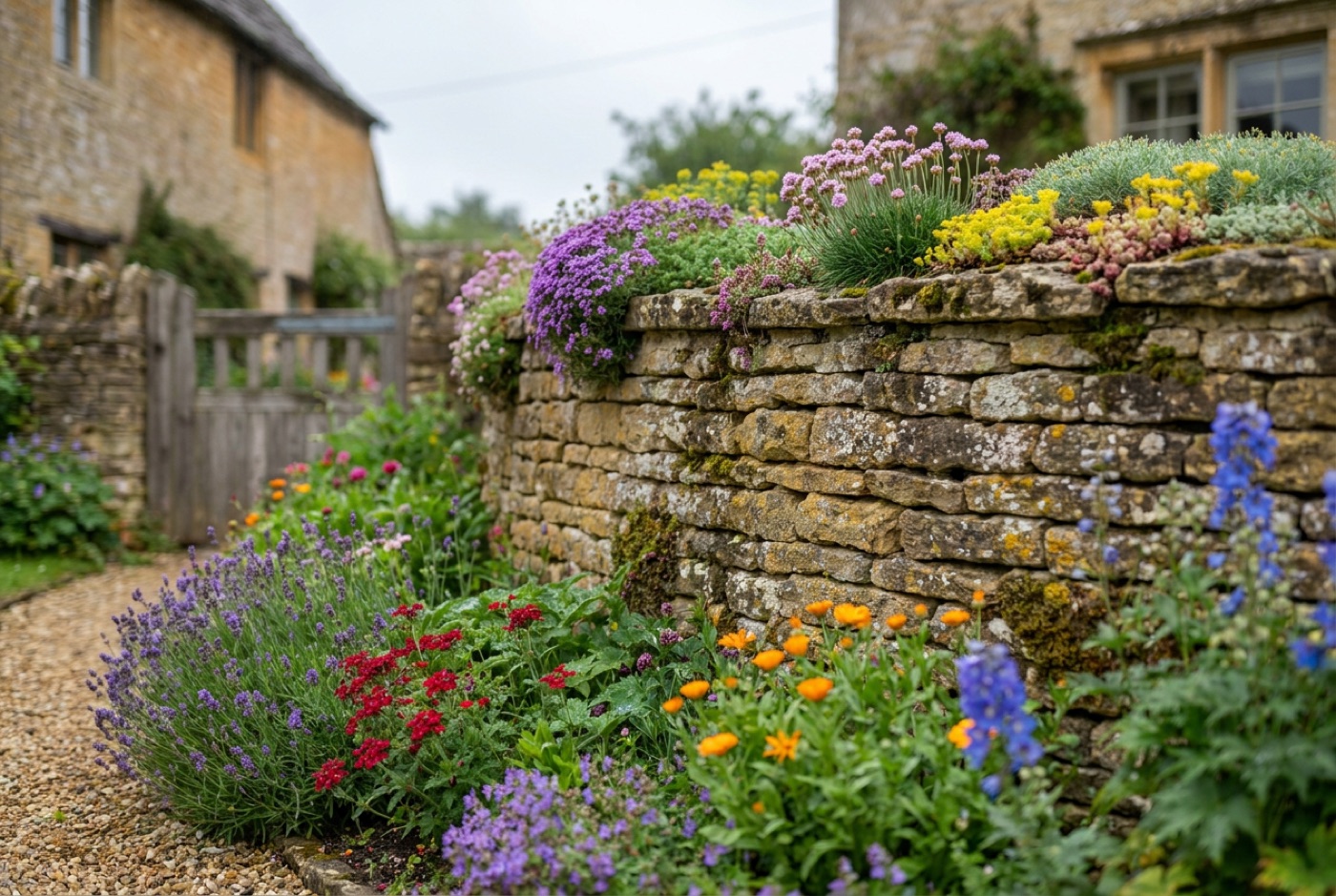
A garden wall does far more than mark a boundary. The right wall gives a flat plot structure, holds back a bank you’ve been fighting for years, frames a seating area, warms up on a sunny day and hands you a planting stage at the perfect height for tumbling colour. These garden wall ideas run through every material worth considering — dry-stone, mortared stone, brick, gabion, rendered blockwork and timber sleepers — and, just as importantly, through what each wall is actually for. There’s a real difference between a low decorative boundary and a wall that’s holding tonnes of soil in place, and getting that distinction right is the whole game. We’ll cover looks, rough cost, planting on and around walls, and how to marry a wall to a flight of garden steps so the two read as one considered design rather than two afterthoughts bolted together.
First, decide what the wall has to do
Before you fall for a look, be honest about the wall’s job. It changes everything — the material, the thickness, the foundation and whether you can build it yourself.
Low boundary and decorative walls simply divide space, screen a bin store, raise a border or edge a patio. They carry only their own weight, sit on a modest foundation and are the friendliest to DIY. Anything up to around knee-to-waist height on level ground falls here.
Retaining walls hold back a change in level — soil, a bank, a raised terrace. They’re under constant sideways pressure from the earth (and the water in it), so they need proper foundations, drainage behind them and, above about 600mm, usually an engineered design. This is a genuinely different discipline: our dedicated retaining wall ideas guide covers the structural detail, and if your whole plot slopes, the sloped garden ideas guide shows how walls, terraces and steps work together to tame it.
If you only take one thing from this article: don’t build a tall retaining wall as if it were a decorative one. It’s the single most common — and most expensive — garden-wall mistake.
Dry-stone walls
The dry-stone wall is the quintessential British field boundary, built without a scrap of mortar. Each stone is chosen and placed so its own weight and the friction of its neighbours lock the wall together, with a slight inward lean (the “batter”) for stability. Done well it lasts centuries and looks utterly at home in a country garden.
- Best for: rural and cottage gardens, informal boundaries, low retaining on gentle banks, wildlife-friendly planting.
- The look: rugged, timeless, full of texture and shadow. It only improves as moss, lichen and stonecrop colonise the joints.
- Watch out for: it’s skilled, slow work, and it eats stone — a double-skinned wall is thicker than people expect. Reclaimed local stone looks best and roots the wall in its setting.
The gaps in a dry-stone wall are a gift for planting and for wildlife. Tuck sedums, houseleeks, thrift and small ferns into the joints as you build, and the wall becomes a living feature within a season or two.
Mortared natural stone walls
If you want the character of stone with more height, strength and a crisper finish, a mortared stone wall is the answer. The stones are bedded and pointed in mortar, which lets you build higher, take more load and achieve a neater face. It’s the go-to for a substantial garden wall that needs to look established from day one.
- Best for: taller boundaries, feature walls, low-to-mid retaining, matching a stone house.
- The look: solid and handsome; the pointing style (flush, recessed, weather- struck) hugely changes the character — recessed joints throw shadow and let the stone dominate.
- Watch out for: the mortar is the weak point outdoors. Use the right mix (a lime mortar suits older, softer stone and lets the wall breathe), and expect to repoint eventually — our guide to repointing stone steps and walls walks through the mix and method.
Brick garden walls
Brick is the workhorse of the British garden wall — endlessly versatile, widely available and unbeatable for tying a garden back to the house. Match the brick and the bond to your property and a new wall can look as though it’s always been there.
- Best for: urban and suburban gardens, period properties, formal boundaries, raised beds and planters.
- The look: neat and architectural. The bond (Flemish, English, stretcher) and the coping on top set the tone — a soldier course, a stone cap or a half-round brick coping all read very differently.
- Watch out for: use frost-resistant bricks rated for external use, never soft internal facing bricks, which spall after a few winters. A damp-proof course and a proper coping keep water out of the wall’s core.
Brick and stone combine beautifully too — a stone coping on a brick wall, or brick piers with stone panels between, gives you the best of both. The same logic applies when you build brick garden steps into a brick wall so the flight and the boundary share a material.
Gabion walls
A gabion is a wire mesh cage (or “basket”) packed with stone. Stack and connect the cages and you get a bold, contemporary wall that’s genuinely structural — gabions make excellent, forgiving retaining walls because they’re free-draining and flex slightly rather than cracking.
- Best for: modern gardens, retaining on slopes, fast builds, industrial-style schemes.
- The look: chunky and architectural. The fill dictates everything — angular slate, rounded cobbles, recycled brick or even split logs each give a completely different character.
- Watch out for: cheap galvanised mesh rusts; specify a heavier gauge or PVC-coated baskets for longevity. Pack the visible faces by hand for a tidy front and let rougher fill go in the middle.
Gabions also make a superb base for a raised planter or a bench, and their flat tops double as informal seating along a terrace edge.
Rendered block walls
For a clean, modern boundary, a concrete-block wall finished with render is hard to beat on cost and speed. The blockwork does the structural work; a coat of render (and paint or a coloured through-render) gives you a smooth, contemporary face in any colour you like.
- Best for: modern and minimalist gardens, courtyard walls, a crisp backdrop for planting or lighting.
- The look: smooth, calm and current — off-white, warm grey or a bold accent colour all work. It’s the classic backdrop for architectural planting like olives, grasses and phormiums.
- Watch out for: render cracks if the wall moves or water gets behind it, so movement joints, a good coping and a bell-cast drip at the base matter. Use an exterior-grade, breathable render, not an interior product.
Timber sleeper walls
Landscaping sleepers stacked and fixed together make one of the quickest, most affordable low walls going — brilliant for raised beds, edging a patio or retaining a gentle bank. Laid on their side and pinned, they build up fast.
- Best for: raised beds, low retaining, rustic and productive gardens, tight budgets.
- The look: warm, chunky and relaxed; oak weathers to silver-grey, treated softwood can be stained any colour.
- Watch out for: use new landscaping-grade sleepers, not old creosote-soaked railway ones, which leach tar and aren’t safe near edible planting. For any real retaining height, pin them to driven posts and add drainage behind.
Garden wall materials compared
Cost bands are rough and indicative — height, foundations, access and whether you build it yourself all move the number.
| Wall type | Best for | Look | DIY-friendly? | Relative cost |
|---|---|---|---|---|
| Dry-stone | Rural boundaries, low retaining | Rugged, timeless | Skilled but no mortar | Mid–premium (stone + labour) |
| Mortared stone | Tall feature walls | Solid, characterful | Moderate skill | Premium |
| Brick | Urban, period, formal | Neat, architectural | Moderate skill | Mid |
| Gabion | Modern, retaining slopes | Chunky, contemporary | Yes, forgiving | Mid |
| Rendered block | Modern, minimalist | Smooth, clean | Moderate skill | Budget–mid |
| Timber sleeper | Raised beds, low retaining | Warm, rustic | Very DIY-friendly | Budget |
Low boundary walls vs retaining walls
It’s worth spelling out the difference because it drives so many decisions.
A boundary or decorative wall carries only itself. On level ground it needs a sensible strip foundation, the right material and a good coping to shed water — and not much else. Most competent DIYers can tackle a low one.
A retaining wall fights the earth behind it every single day. Wet soil is astonishingly heavy and pushes sideways, so a retaining wall needs:
- A substantial, engineered foundation sized for the load.
- Drainage behind it — a free-draining backfill (gravel), a perforated land drain at the base and weep holes through the face — so water pressure can’t build up and shove the wall over.
- Enough mass, reinforcement or a leaning/battered profile to resist the push.
Above roughly 600mm of retained height, or anywhere a failure could affect a neighbour, a path or a building, get a structural engineer involved. The retaining wall ideas guide goes into materials, drainage and cost in depth, and it’s the piece to read before you dig.
Planting on and around garden walls
A wall is a planting opportunity, not just a barrier. Used well it adds a whole extra layer to the garden.
- In the joints. Dry-stone and recessed-joint walls suit crevice plants — houseleeks (sempervivum), stonecrop (sedum), erigeron, thrift, small ferns and aubretia will colonise the face and soften it beautifully.
- Tumbling over the top. Plant a border along the top of a low retaining wall with trailers — rosemary, thyme, aubretia, ivy-leaved toadflax — so they spill down the face and blur the hard edge.
- Climbers against it. A sunny wall is a suntrap. Train a climbing rose, clematis, jasmine or an espaliered fruit tree against it and you gain height and scent without floor space.
- A raised bed behind it. A low retaining wall is, by definition, the front of a raised bed — fill it with free-draining soil and you’ve created the perfect home for Mediterranean herbs and alpines that hate wet feet.
- Wildlife. Leave a few deliberate gaps and cavities. A dry-stone or gabion wall is prime habitat for solitary bees, beetles, newts and slow-worms.
Aspect matters. A south- or west-facing wall bakes and suits Mediterranean and alpine planting; a north- or east-facing wall is cool and shaded, ideal for ferns, hostas and shade-tolerant climbers.
Combining walls with steps
Walls and steps are natural partners, and the best gardens treat them as a single gesture. A few ways they work together:
- Steps threaded through a boundary wall. A flight passing through a gap in a low wall, with the wall returning to form the cheeks, feels deliberate and grand.
- Retaining walls that become steps. On a slope, terrace the ground with low retaining walls and let a flight climb between the levels — the walls and the steps do each other’s work. This is the heart of the sloped garden ideas approach.
- Matching materials. Build the steps from the same stone or brick as the wall so the two read as one. A brick wall with brick-and-stone steps, or a stone wall with matching stone treads, always looks designed rather than added.
- Coping as tread. A wide, flat coping can literally continue as a step tread where a wall meets a level change, tying the two together at the exact point they meet.
For the treads themselves, match the stone to the wall and the house — our guide to the best stone for garden steps walks through the options — and remember the same rule that governs steps governs wall copings: a riven or textured surface sheds water and grips far better than a smooth, sawn one.
A quick word on foundations and coping
Two details make or break a garden wall of any material.
The foundation. A wall is only as good as what it stands on. A low wall needs a firm, level concrete strip footing below the topsoil; a taller or retaining wall needs a deeper, wider, often reinforced foundation sized to the load. Skimp here and the wall cracks, leans and eventually fails.
The coping. The top course — the coping or capping — is the wall’s raincoat. A slightly overhanging, weathered coping (stone, brick-on-edge, or a purpose-made concrete cap) throws water clear of the face and stops it soaking into the core, where frost then does its damage. Never leave a masonry wall open-topped through a British winter.
FAQ
How high can I build a garden wall without planning permission?
In England, as a rule of thumb you can usually build a boundary wall up to 2 metres without planning permission, dropping to 1 metre where the wall fronts a road or footpath used by vehicles. Height is measured from the higher ground level. Listed buildings, conservation areas and Article 4 directions have stricter rules, and these limits can change, so always check with your local planning authority before you start.
What is the cheapest type of garden wall?
For a low wall, timber sleepers or a rendered concrete-block wall are usually the most economical, being fast to build with inexpensive materials. Gabions are also good value for retaining because they need less foundation and no mortar. Natural stone (especially dry-stone and mortared) tends to cost the most, driven by the price of the stone and the skilled, slow labour it demands.
Do I need drainage behind a garden wall?
Behind a plain boundary wall on level ground, no — but behind any retaining wall holding back soil, drainage is essential. Wet earth builds up huge water pressure that will eventually push an undrained wall over. You need free-draining gravel backfill, a land drain at the base and weep holes through the face. See our retaining wall ideas guide for the full detail.
What can I plant on top of a garden wall?
Trailing and tumbling plants work best on a wall top: aubretia, trailing rosemary, thyme, ivy-leaved toadflax and erigeron all spill attractively over the face. In the joints of a dry-stone wall, tuck in houseleeks, stonecrop and small ferns. Match the planting to the wall’s aspect — sun-lovers on a south-facing wall, shade-tolerant ferns and hostas on a cool north-facing one.
Should a garden wall have a coping?
Yes. A coping (the finishing top course) protects the wall by throwing rainwater clear of the face, which stops water soaking into the core and freezing. Without one, a masonry wall absorbs water, spalls in frost and deteriorates far faster. A slightly overhanging stone, concrete or brick-on-edge coping is well worth the modest extra cost on any wall you want to last.
Can I build a garden wall myself?
Low decorative and boundary walls are within reach of a confident DIYer — a rendered block wall, a low brick wall, sleeper edging or a gabion are all achievable with care and the right foundation. Retaining walls above about 600mm are a different matter: they carry serious loads and a failure is dangerous and expensive, so those are best designed by an engineer and built by a professional. Mortared stone and dry-stone walling also reward real skill, so start low if you’re learning.